BrandCrux
AI VisibilityHow AI engines see, mention, and recommend your brandWeb SearchGoogle, Bing, DuckDuckGo, Yandex rankingsAuthority SignalsDirectory + publisher citations across the open webSocial AuthorityCompetitor engagement across socialsOwned AnalyticsSearch Console + GA4 with an AI analyst
Signal overviewHow AI engines see, mention, and recommend your brandVisibility TrackingScore your presence across every AI source15 AI SourcesWeb GUI + API tiers, both in every scanCompetitor IntelligenceSee who AI recommends instead of youCitation AnalysisTrack which sources link back to your siteEntity TrackingMonitor how AI describes your brandPrompt IntelligenceDiscover the prompts your customers askGEO AuditAudit your AI visibility by locationAI AssistantAsk questions about your data in plain English
PricingFree Scan
MethodHow we measure brand visibilityAPI & DocsREST + MCP referenceIntegrationsGA, Search Console, CMS connectionsGuidesConnect WordPress, Shopify, Webflow, moreChangelogWhat we shipped and whenCompareBrandCrux vs every alternativePartner ProgramEarn 25% on every customer you refer
Sign inStart Free
Home/Method
Method

How BrandCrux measures brand visibility

Working notes from the team. Why we sample the way we sample, how the classifier decides what counts, what the composite score is actually doing under the hood. Written for operators who want the numbers behind the number.
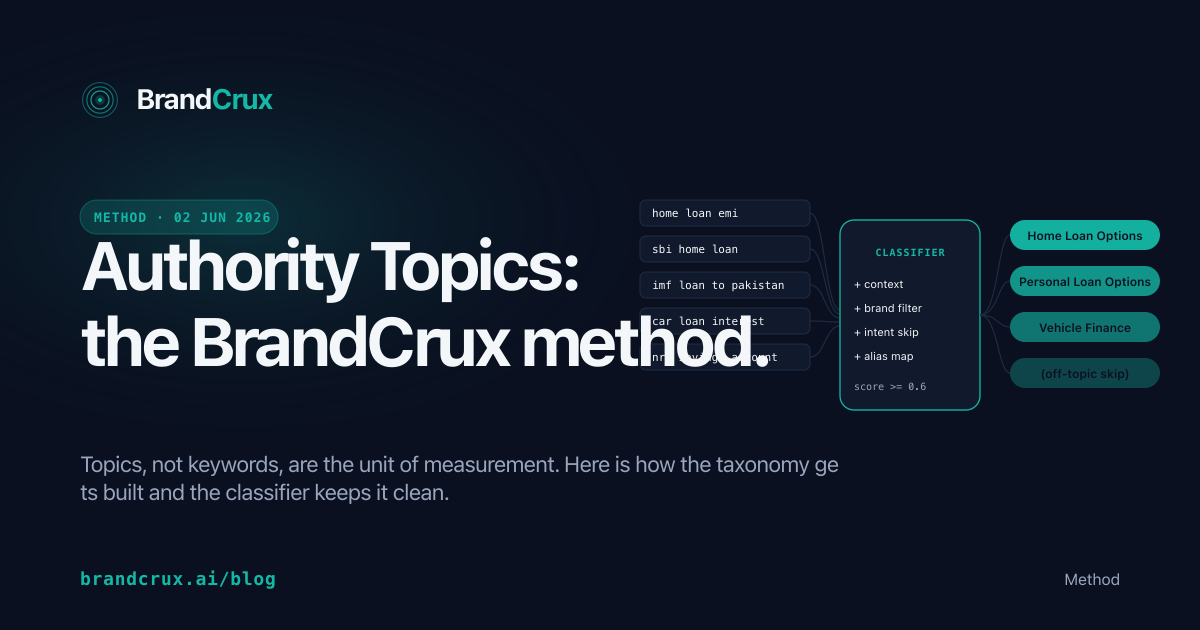
Authority Topics: how we decide what your brand should be known for
02 Jun 2026·8 min read·Method

Authority Topics: how we decide what your brand should be known for

Topics, not keywords, are the unit of measurement inside BrandCrux. Here is how the taxonomy gets built, how the classifier keeps it clean, and how the per-topic composite blends seven separate signals into one score.

Read →
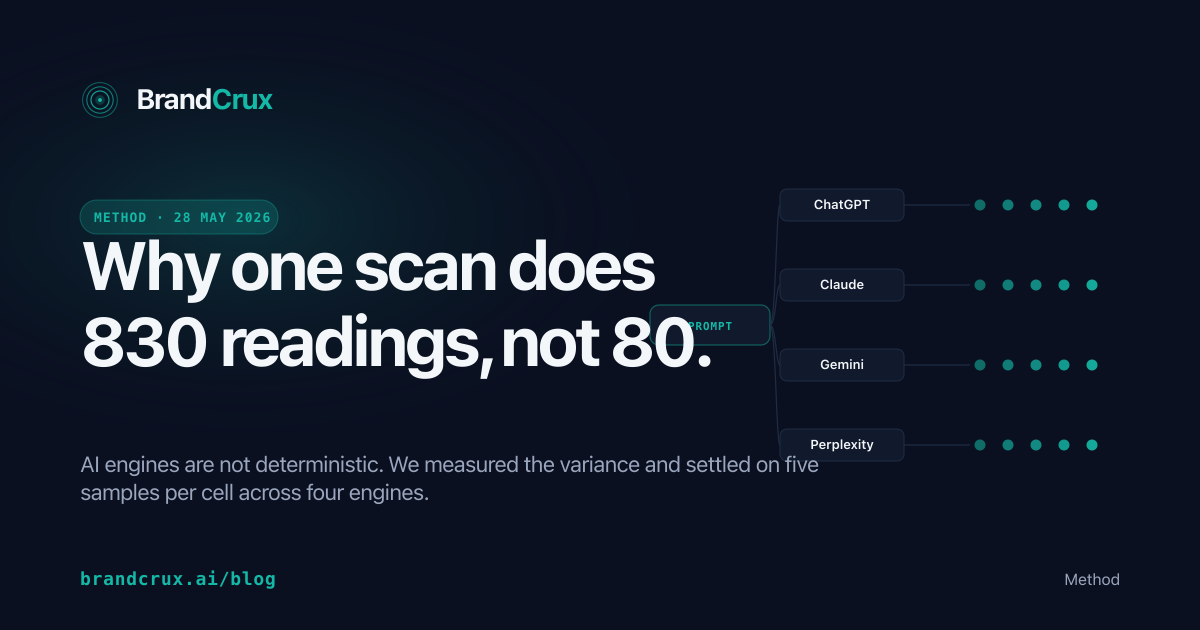
Why one scan does 830 readings, not 80
28 May 2026·6 min read·Method

Why one scan does 830 readings, not 80

AI engines are not deterministic. A 40-prompt scan that looks like 160 work units is actually 830 readings. Here is the variance we measured and why five samples per cell was the number we settled on.

Read →